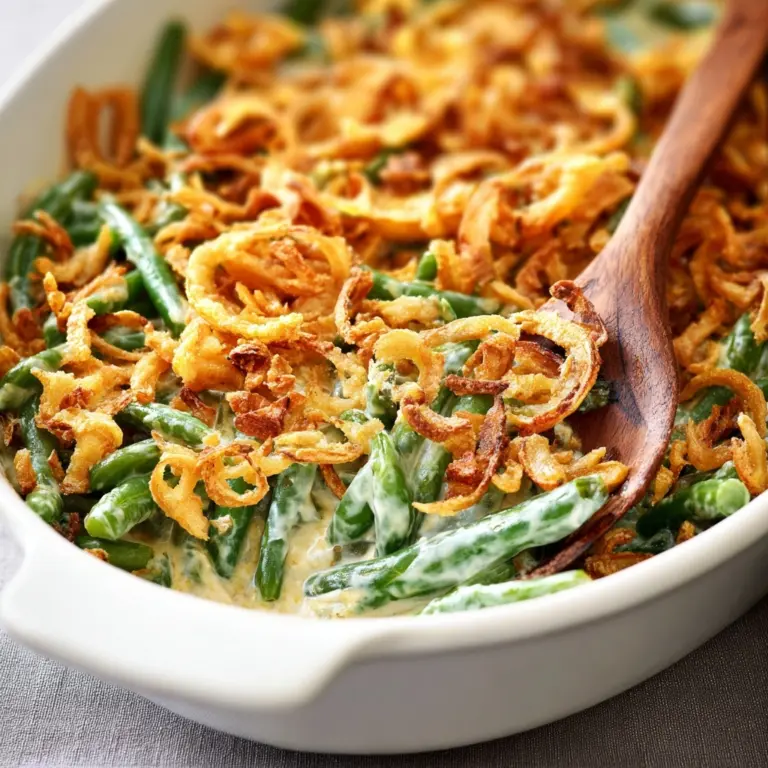
Tangy Dill Pickle Sourdough Bread Recipe
Introduction
Looking to add a tangy twist to your usual sourdough routine? This Tangy Dill Pickle Sourdough Bread combines the bright flavors of dill pickles and fresh dill with classic sourdough, making a savory loaf perfect for sandwiches or alongside your favorite soups. It’s an exciting way to use your sourdough starter and a jar of pickles in one delicious bake.
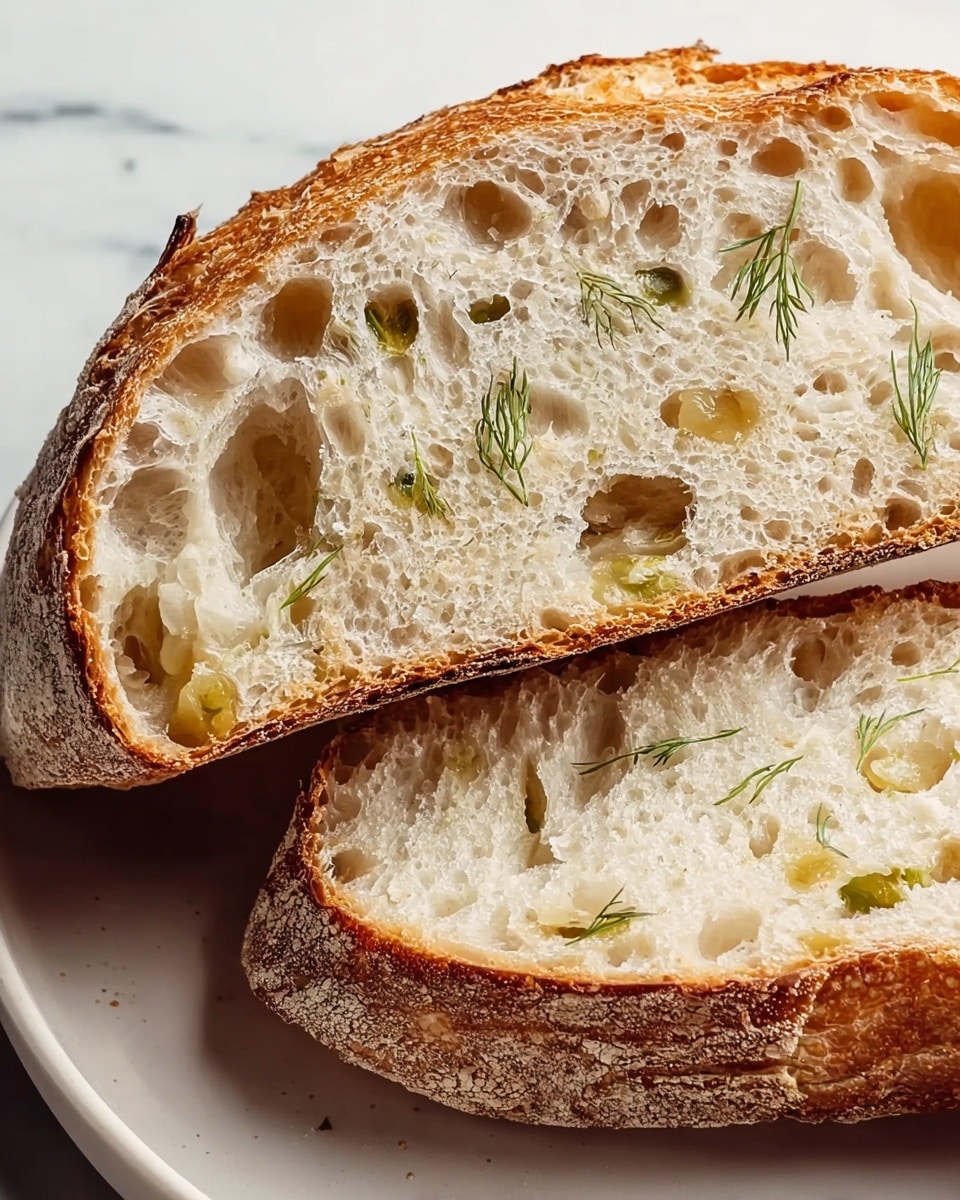
Ingredients
- 50g active sourdough starter
- 7g fine sea salt
- 35g whole wheat flour
- 260g filtered water (warmed to 85°F)
- 375g white bread flour
- 30g dill pickle brine
- 1 1/2 tbsp fresh dill (finely chopped)
- 80g diced dill pickles (patted dry)
Instructions
- Step 1: In a large bowl, mix the starter, warm water, and dill pickle brine with a fork until the starter is thoroughly dispersed. Add the whole wheat and bread flours and mix with a spatula, then your hand, until a shaggy dough forms with no visible dry flour. Sprinkle the salt on top, cover with a damp cloth, and let it rest for 40 minutes.
- Step 2: Knead the dough with your hands for two minutes to incorporate the salt. Perform the first stretch and fold by grabbing a portion of dough, stretching it upward, and folding it over itself. Cover and rest for 30 minutes.
- Step 3: Sprinkle the diced pickles and chopped fresh dill evenly over the dough, making sure to reach the edges. Perform another stretch and fold to mix them in. Rest the dough for 30 minutes.
- Step 4: Repeat two additional sets of 30-minute rests followed by stretch and fold cycles, completing four total cycles to build the dough structure.
- Step 5: Allow the dough to bulk ferment covered on the counter until it rises about 75%, approximately 4 hours at 74°F. When slightly less than doubled, glossy with bubbles, gently move the dough onto a floured surface and rest for 10-15 minutes. Shape the dough, place it seam-side up in a flour-dusted, linen-lined banneton, cover, and let it rise for the final time.
- Step 6: Final proof can be done overnight in the fridge (up to 12 hours) or about 1 1/2 hours at room temperature. Preheat oven and Dutch oven to 450°F. Turn dough onto parchment with the seam side down, score at least ½ inch deep. Place dough in the Dutch oven, cover, and bake 25 minutes at 450°F. Uncover, reduce heat to 435°F, and bake 20 more minutes until golden and crackly.
- Step 7: Let the bread cool completely for at least one hour before slicing to ensure ideal texture and prevent gumminess.
Tips & Variations
- Always pat your pickles dry to prevent excess moisture from affecting dough texture.
- Use refrigerated kosher dill pickles for the best flavor and texture.
- If fresh dill isn’t available, substitute with 1½ teaspoons dried dill weed.
- For a different flavor, try bread and butter pickles but remember this will alter the taste.
- If you don’t have pickle brine, use water plus ¼ teaspoon salt, though flavor will be milder.
- Ensure your sourdough starter is active and bubbly for a good rise and light crumb.
Storage
Store bread wrapped in a clean kitchen towel or bread bag at room temperature for 4-5 days. Avoid refrigeration to prevent staling. To freeze, slice cool bread, separate slices with parchment, and store in a freezer bag for up to 3 months. Reheat frozen slices by toasting or warm a whole loaf in a 350°F oven with a sprinkle of water for 10 minutes to revive crust crispiness.
How to Serve
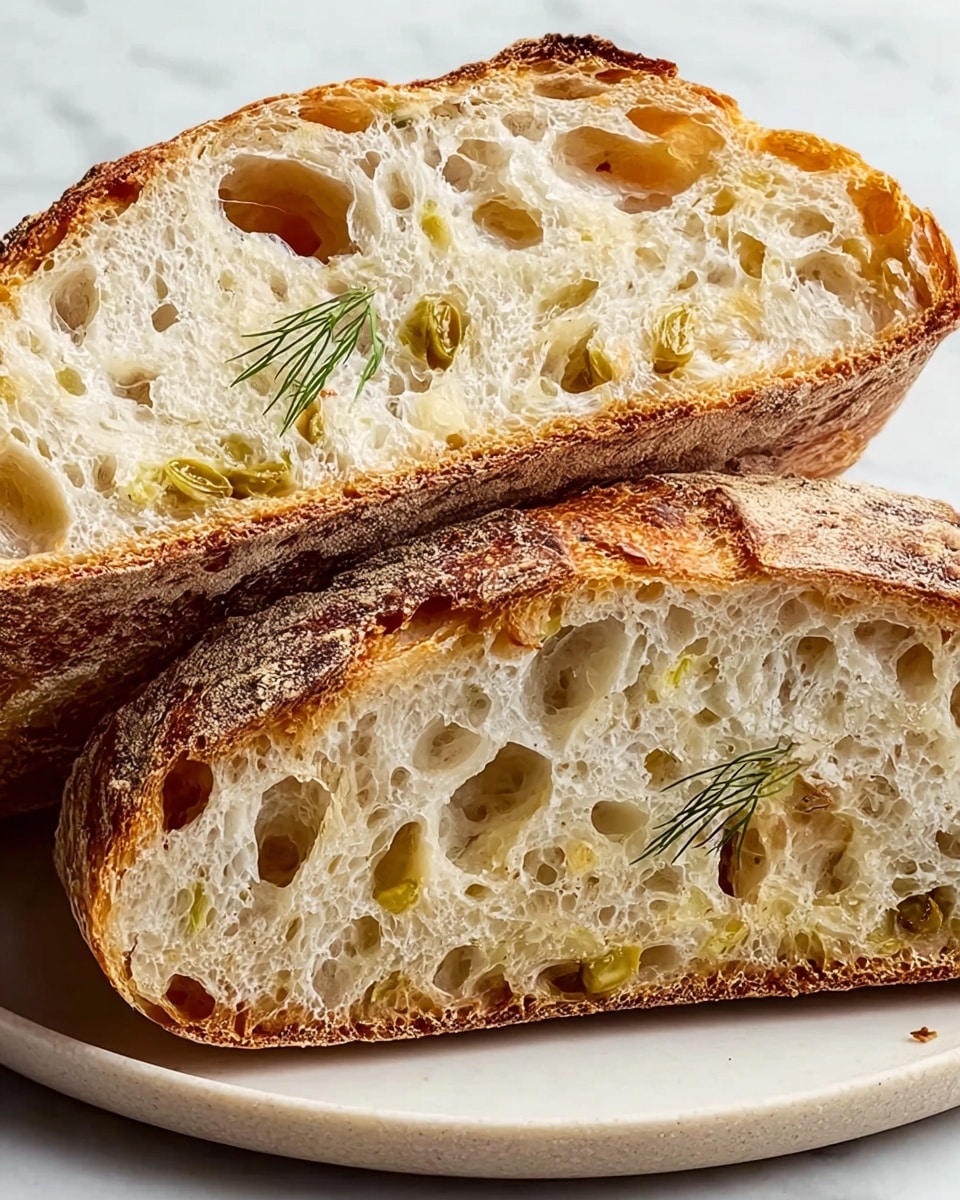
Serve this delicious recipe with your favorite sides.
FAQs
Can I use all-purpose flour instead of bread flour?
Yes, you can substitute all-purpose flour, but expect a slightly less chewy texture and a lower rise due to reduced protein content.
When should I add the pickles to the dough?
Fold the diced pickles into the dough during the later stretch and fold cycles to prevent excess moisture and preserve their texture.
Print
Tangy Dill Pickle Sourdough Bread Recipe
- Total Time: 105-120 minutes
- Yield: 1 loaf (approximately 12 slices) 1x
Description
This Tangy Dill Pickle Sourdough Bread is a delightful twist on classic sourdough, incorporating zesty dill pickles and fresh dill to create a uniquely flavorful loaf. Perfect for sandwiches or alongside soups, it uses your sourdough starter and pickle brine efficiently, making it a smart, tasty way to elevate everyday bread baking.
Ingredients
For the Dough:
- 50g active sourdough starter
- 7g fine sea salt
- 35g whole wheat flour
- 260g filtered water (warmed to 85°F)
- 375g white bread flour
- 30g dill pickle brine
For the Mix-ins:
- 1 1/2 tbsp fresh dill (finely chopped)
- 80g diced dill pickles (patted dry)
Instructions
- Mix and Initial Rest: In a large bowl, combine the active sourdough starter, warm filtered water, and pickle brine using a fork until the starter is fully dispersed. Add both flours and mix with a spatula, then your hand until a shaggy dough forms with no visible dry flour. Sprinkle the salt evenly on top, cover with a damp cloth, and let rest for 40 minutes.
- Knead and Incorporate Salt: After resting, knead the dough vigorously by hand for two minutes to fully incorporate the salt. Perform the first stretch and fold by grabbing a portion of dough, stretching it upwards, and folding over itself. Cover and rest again for 30 minutes.
- Add Flavorings and Continue Stretch and Fold: Sprinkle the diced pickles and chopped fresh dill evenly over the dough, ensuring distribution to the sides of the bowl. Perform another stretch and fold to incorporate the mix-ins. Let the dough rest for another 30 minutes.
- Complete Stretch and Fold Sequences: Perform two additional rounds of stretch and folds, each followed by a 30-minute rest, completing four total stretch and fold cycles to develop dough strength and structure.
- Bulk Fermentation and Shaping: Let the dough bulk ferment covered on the counter at around 74°F until it rises about 75%, approximately 4 hours. The dough should appear glossy, slightly bubbly, and nearly doubled. Gently transfer to a floured surface and rest for 10-15 minutes. Shape the dough as desired, place seam-side up in a floured, linen-lined banneton, cover with a shower cap or damp cloth, and allow final proofing.
- Final Proof and Baking: Proof the dough overnight in the fridge up to 12 hours for convenience and shape retention or about 1.5 hours at room temperature until slightly puffy. Preheat the oven to 450°F with a Dutch oven inside. Turn the dough out onto parchment paper, score the top deeply (at least 1/2 inch), place it in the hot Dutch oven covered, and bake for 25 minutes. Uncover, reduce the temperature to 435°F, and bake an additional 20 minutes until golden and crusty.
- Cooling: Remove the bread and allow to cool completely for at least one hour before slicing to ensure the interior texture sets properly and avoids gumminess from residual steam. Enjoy your tangy dill pickle sourdough!
Notes
- Use refrigerated kosher dill pickles that are firm and crisp to maintain texture during baking.
- Pat pickles thoroughly dry to prevent excess moisture from affecting dough consistency.
- Active sourdough starter is essential; ensure it is bubbly and passes the float test before use.
- Substitute all-purpose flour for bread flour if needed, but expect a slightly less chewy loaf.
- If fresh dill is unavailable, use 1½ teaspoons dried dill weed; do not use dill seeds.
- Properly manage moisture by adding pickles during final stretch and fold, not earlier.
- Store bread wrapped at room temperature for 4-5 days or freeze slices for up to 3 months.
- Reheat frozen slices in a toaster or warm whole loaf at 350°F for 10 minutes with moisture sprinkled to refresh crust.
- Prep Time: 60-75 minutes
- Cook Time: 45 minutes
- Category: Bread
- Method: Baking
- Cuisine: American
Keywords: sourdough bread, dill pickle bread, tangy bread, homemade sourdough, pickles, dill, artisan bread, sandwich bread